Most people who have suffered any sort of injury are familiar with scar tissue. Cuts, scrapes, and stitches can result in visible, external scars that can be seen months or years after the injury. This scar tissue looks, feels, and behaves differently than surrounding skin.
Likewise, musculoskeletal injuries can result in internal scar tissue formation. While this scar tissue cannot be seen, it also looks, feels, and behaves differently than other surrounding tissues. Symptoms of internal scar tissue will vary depending on how and where it forms in the body.
- Does it take you a while to “get moving” in the morning due to a stiff back or joints?
- Do you have an old injury that still causes pain, years later?
- Have you been told your pain is due to scar tissue after surgery?
Each of these is an example of pain or mobility issues caused by internal scar tissue. Read on to understand what scar tissue is, what causes it, and treatments for scar tissue pain.
→ Scar Tissue Treatment at InMotion Pain Solutions
What is Internal Scar Tissue?
Most tissues in the body have fibers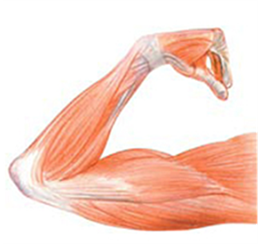 that run parallel to one another. This structure gives the tissue strength, mobility, and allows for proper blood flow.
When bodily tissue is compromised due to an injury, be it a cut, tear, or sprain, that tissue heals with scar tissue. Scar tissue formation begins less than 24 hours after the injury. Unlike the tissue it is replacing, the fibers in scar tissue form in random, crisscross patterns. This dense, fibrous tissue is contracted, so it does not move as freely as regular tissue. Scar tissue is structurally weaker, easier to damage, and has poor blood flow compared to the tissue it is replacing. Scar tissue also has ten times as many pain fibers as regular tissue. The resulting pain and stiffness create a physical barrier to natural movement.
Scar tissue can also creep into the tissues that surround the area of the original injury, further amplifying pain and restriction. Knee replacement offers an example of how scar tissue after surgery can infiltrate surrounding structures.
In the case of a knee replacement, 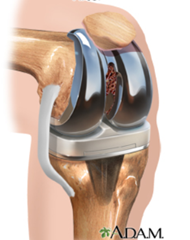 an incision is made down the front of the knee, the kneecap is moved aside, and the ends of the thigh bone (femur) and shin bone (tibia) are cut away. The end of the thigh bone is replaced with a curved piece of metal, and a flat piece of metal is put in place at the end of the shin bone. A plastic spacer is then inserted between the two to take the place of cartilage. The wound is then closed and stitched or stapled in place.
Scar tissue will naturally form to heal from the trauma of surgery. The skin, muscles, and any bones that were cut will heal with scar tissue. Unfortunately, sometimes the formation of scar tissue extends beyond the damaged tissues to surrounding soft tissues, ligaments, tendons, and the joint capsule itself. So, while the new, artificial joint itself may be in pristine condition, the tight scar tissue that forms around the replacement knee joint can be very painful and restrict motion. In some cases, the scar tissue will climb up into the kneecap and into the front muscle in the thigh – causing even more pain and loss of motion. It can even get to the point where the patient is unable to bend their new knee.
It is important to understand that the surgeon may have done a perfect total knee replacement, and the patient could have completed their post-surgical rehab to a tee – and still the patient may be left in a state of chronic pain and limited motion. It’s not the surgeon’s fault. Nor is it the patient’s fault. Everyone will heal with scar tissue. Unfortunately, there is no way to predict how any one person’s internal scar tissue formation will behave.
Excessive Scar Tissue Causes Painful Arthritis
Inflammation is a driver of healing within the body. The inflammatory response opens blood vessels to enable fluid and immune cells to flow into the injured tissue. This causes swelling, redness, and pain at the site of the injury. This provides protection to the injured area while signaling other cells to begin the healing process – which includes the formation of scar tissue.
Normally, the inflammation will subside in time. Movement will also help to pump inflammation out of the body.
Sometimes, that inflammation does not go away. For example, tendons and ligaments that are under continuous stress may be chronically inflamed. Chronic inflammation provides an ongoing message to the body to produce scar tissue. This scar tissue will form in layer upon layer. Excess scar tissue formation is a condition known as fibrosis. If the affected area is a joint, it is called arthrofibrosis.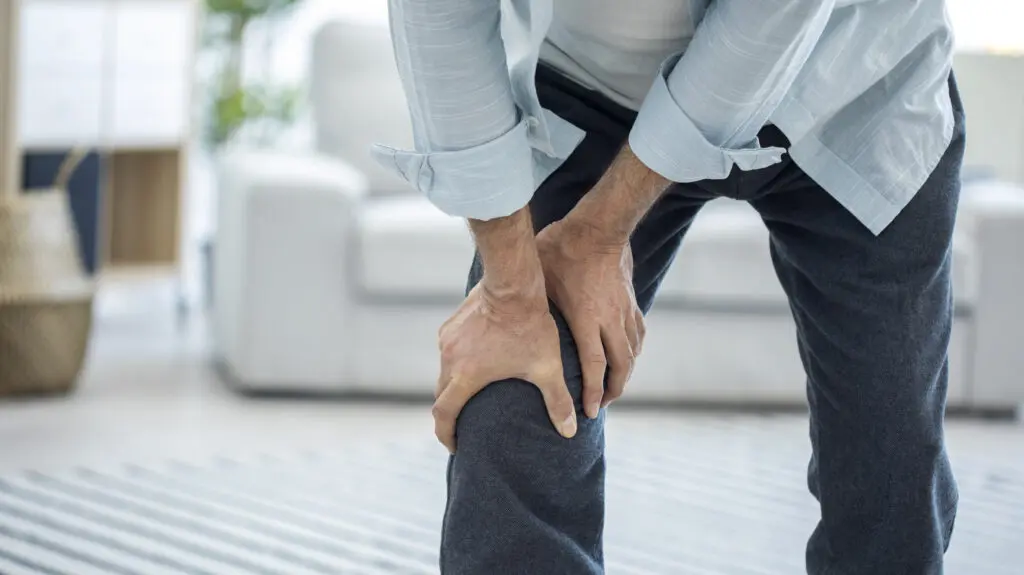
Fibrosis causes adhesions which prevent muscles, ligaments, and other moving parts from functioning correctly. This can lead to ongoing pain, even more chronic inflammation, and loss of function in a cycle that worsens over time. When excess scar tissue is accompanied by a lack of movement – and if the scarring is heavy enough – the body may lay down calcium which will harden, or ossify, the scar tissue. The result of which is painful arthritis.
→ Scar Tissue Treatment at InMotion Pain Solutions
What Causes Internal Scar Tissue?
There are three main causes of internal scar tissue: repetitive motion, trauma, and post-surgical scar tissue formation.
Repetitive Motion
Repetitive motion or repetitive actions can lead to degenerative scar tissue. A simple example would be a factory worker who does essentially the same movements every day for 20 years. This repetitive action can lead to injury and inflammation of the joints which, in turn, leads to scar tissue formation. Any joint that has degenerated due to overuse will have scar tissue.
Trauma or Injury
Trauma or injury causes scar tissue. As you read earlier, when the body experiences an injury, such as a cut, strain, or tear the only thing that it can heal with is scar tissue.
Scar Tissue After Surgery
Scar tissue will also form after any surgical procedure as a part of the healing process. Really, the only difference between scar tissue from trauma and scar tissue that forms after surgery, is the matter of choice. In this context, the surgical procedure is simply a trauma that was incurred by choice.
Can Internal Scar Tissue Be Treated?
Internal scar tissue will never go away. However, if treated properly, you can work to restore movement and minimize pain. There are a variety of treatments for scar tissue pain – some more effective than others.
→ Scar Tissue Treatment at InMotion Pain Solutions
Over-the-Counter Medications and Home Remedies
Over-the-counter medications and home remedies generally are treating the symptoms associated with scar tissue as opposed to the scar tissue itself. Pain relievers and ice may help relieve pain. Heating pads can assist with stiffness. While these may provide temporary relief, they are not addressing the scar tissue itself. In fact, overuse of heating pads can actually speed up arthritic changes in the body. Overuse of painkillers, both prescription and OTC, is not safe. Unless you address the scar tissue itself, versus the symptoms, pain relief will only be temporary.
Corticosteroid Injections
Some patients find temporary relief from scar tissue pain by getting corticosteroid injections. Corticosteroids are powerful anti-inflammatory medications. The benefit of corticosteroid injections are that by reducing inflammation, they can provide temporary pain relief and perhaps increase joint mobility. But, keep in mind, the injection has done nothing to help soften or retrain existing scar tissue. It’s addressing the symptom, but not impacting the cause.
Beyond that, patients are limited in how many corticosteroid injections they can receive, usually 3-5 per year. This is because over time, the steroid itself will damage tissue at the site of the injection. And how does that damaged tissue heal? With more scar tissue.
Physical Therapy for Scar Tissue Pain
Physical therapy can be a viable option for scar tissue treatment and associated pain. Physical therapists use a combination of active and passive motion to break down and retrain scar tissue. Active motion refers to a patient moving the affected area under his or her own power. Passive motion, on the other hand, involves the therapist physically moving the patient’s body through a series of stretches and joint mobilization techniques. The physical therapist may also massage scar tissue to soften and elongate it. These therapies are most effective when the injury is fairly recent and the scar tissue is closer to the surface of the skin.
However, for people who have been suffering the effects of scar tissue for a long period of time, whose scar tissue has formed deep below the surface of the skin, or who also deal with chronic pain memory, physical therapy may not be able to provide lasting pain relief. The process of physical therapy itself may also be very painful for the patient if joints are badly affected.
Surgery to Remove Scar Tissue
Surgical interventions to remove scar tissue should always be viewed as a last resort. Scar tissue removal might seem like a logical solution, but it can be accompanied by unintended consequences. This treatment is commonly seen following joint replacement surgery. While it is possible for a surgeon to do a fantastic job of physically cutting and scraping away internal scar tissue – they are doing so via an invasive procedure. And how does your body heal from the trauma of surgery? With more scar tissue.
Another factor to consider when it comes to surgical removal of scar tissue is that it is a very targeted versus a holistic approach. Surgical approaches to removal of scar tissue are simply cleaning out the joint space. However, for the patient to regain function in the joint, you have to look beyond the joint space to the muscles, ligaments, tendons, and nerves that make up the complete joint.
Holistic Treatment for Scar Tissue Pain
The most effective treatment for painful scar tissue is one that takes a holistic approach – taking into account how the different parts of the body rely upon and work with one another to optimize function. To accomplish this, we enlist a variety of treatments and therapies at InMotion Pain Solutions, customized to each patient.
The first step is to break down the scar tissue. At InMotion Pain Solutions, we utilize therapies focused on breaking up the fibrous tissue at the cellular level, while increasing blood flow in the affected area. Breaking up the tissue aids in mobilization and increasing blood flow promotes healing, without the formation of new scar tissue.
Beyond addressing the scar tissue itself, we work to ensure that the surrounding muscles, bones, nerves, and ligaments are functioning properly. It takes all these components working together to restore proper motion. At InMotion Pain Solutions, we use both joint manipulation and high intensity laser therapy to achieve this goal.
→ Scar Tissue Treatment at InMotion Pain Solutions
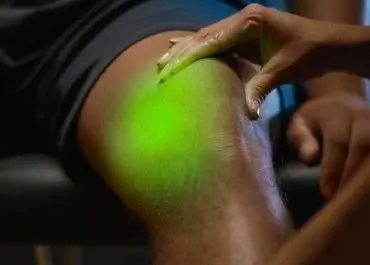
High intensity laser therapy (HILT) is a form of photobiomodulation therapy. It is an FDA-cleared treatment that heals damaged tissues at the cellular level. It accomplishes this by softening scar tissue, reducing inflammation, calming muscle spasm, improving blood flow, enhancing nerve function, and actually accelerating DNA and RNA repairs at the cellular level. In addition, laser therapy resets the chronic pain signal to relieve pain and restore proper communication between your brain and the rest of your body. Learn more about HILT.